Do you need to keep paper receipts in the UK if you have a photo of them?
Often not. HMRC lets you keep the information instead of the paper if your copy captures everything a correct return needs and can be read back clearly. A few documents must stay in their original form.
Quenta5 min read
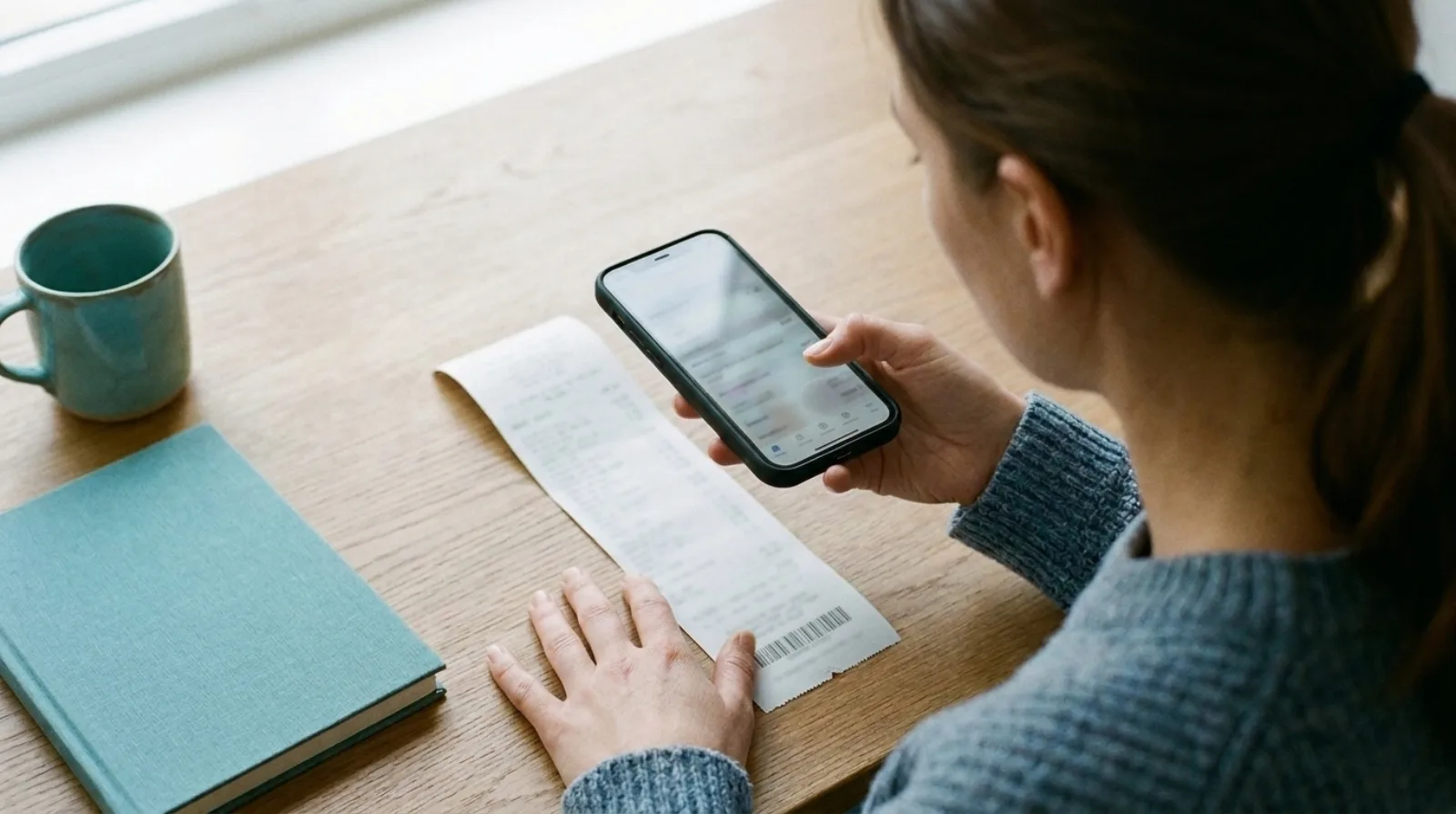
Short answer: often you do not need the paper, but only if the photo does the paper's job. HMRC's Compliance Handbook says you can meet your record-keeping duty by preserving the information in the original documents, and may discard the paper if your copy captures all the information needed for a correct and complete return and reproduces it in a legible form. If it cannot, you must keep the original as well. A few records must always stay in their original form.
This is a plain reading of HMRC's published guidance, not accounting or tax advice. If you are about to bin a large stack of paper, ask your accountant first.
What does HMRC actually say about photos and scans?
HMRC's rule is about information, not paper. The Compliance Handbook page on how records may be preserved says a person meets the duty by keeping the original documents or by "preserving the information contained in the original documents". Paper may be thrown away once it is stored electronically, provided the method:
- captures all the information needed to make a correct and complete return, and
- reproduces that information in a legible form.
If the method cannot do both, the original has to be kept too. The page adds that some records must be kept in their original form, and that HMRC may set out conditions and exceptions in writing.
HMRC's own example on that page is to photograph the records and store the photographs, so a photo is an accepted way to preserve the information. What decides whether it is good enough is the two-part test above. So the question to ask of any photo is "could I hand this over in five years and show everything the paper showed?"
What makes a photo good enough?
A photo is good enough when every part of the receipt that matters is in frame and readable on screen: the supplier, the date, the items or description, the amount, and any VAT detail. A cropped total, a glare patch across the supplier's VAT number or a fold through the date fails the second half of HMRC's test, however neat the photo looks as a thumbnail.
Two habits help:
- Photograph the whole receipt, flat, in good light. Long thermal receipts can run past the frame, so capture the top and the bottom.
- Zoom in once after taking it. If you can read the total and the date on the screen, it is a fair test that a reviewer could too.
Which records must you keep in their original form?
Some documents cannot be replaced by a copy. The clearest example in HMRC's guidance is the C79 import VAT certificate: VAT Notice 700/21 says you must still keep a C79 in its original form. Everyday till receipts are not on those lists, but the handbook points to a further page (CH13300) for the full position, so check it if your paperwork is unusual.
What about VAT receipts?
If you are VAT registered, the same logic applies. VAT Notice 700/21 gives two examples (section 6). Typing figures into software does not replace the invoice, because that data "is not a copy of the invoice". But if you keep a scanned image that contains all the detail required for VAT purposes, you need not keep the original invoice unless you need it for another reason.
Records for VAT generally have to be kept for at least 6 years (section 2.4). A photo you cannot find in year four is no use, so where the image lives matters as much as the image.
Does it differ for sole traders and limited companies?
Sole traders and limited companies keep records for different periods, but the same format test applies.
- Sole traders keep records for at least 5 years after the 31 January submission deadline of the tax year, according to HMRC's page on how long to keep your records.
- Limited companies keep records for 6 years from the end of the last company financial year they relate to, longer in some cases, according to HMRC's guide to company and accounting records. That page lists receipts, petty cash books, orders and delivery notes among the records of money spent.
The two retention pages above do not state what format a copy must take. The format test comes from the Compliance Handbook page above. If you use Making Tax Digital for Income Tax, read this guide too.
Where should the photo live?
Keep the photo attached to the Xero transaction it supports, so anyone who opens that transaction finds it. A photo in your camera roll is found by whoever remembers taking it. A photo attached to the spend money transaction in Xero is found by anyone who opens that transaction, including your accountant.
Quenta turns a photograph of a receipt into a completed transaction in Xero, with the original image attached. If it needs one answer before it can post safely, the receipt waits in Review instead of posting a guess. The how it works guide describes each step, and receipts that arrive by email can be forwarded in instead. Quenta does not decide whether a copy meets HMRC's test. You do, by checking the image is complete and legible.
If a receipt has already gone missing, see what to do when you lose one.
Quick answers
Can I throw the paper away after photographing it? HMRC's handbook allows it if the stored copy captures all the information needed for a correct and complete return and can be reproduced legibly. If in doubt, keep the paper until you have checked the image.
Is a bank statement a substitute? No. It shows that money left the account, not what it bought or the VAT charged, and VAT Notice 700/21 treats the invoice as the evidence.
How long do I keep the photo? As long as the paper: at least 5 years after the 31 January filing deadline for a sole trader, 6 years from the end of the financial year for a company, and generally at least 6 years for VAT records.
What does Quenta cost? The free plan covers 10 receipts a month per organisation. Quenta Pro is £6 per user a month, or £60 per user a year, tax included, and is fair-use capped at 350 receipts a month per workspace. See pricing.
Quenta is an independent app from We UC Ltd. Xero is a trademark of Xero Limited. Quenta is not affiliated with or endorsed by Xero.
Photograph it and forget it.